
This post contains affiliate links. If you purchase through my links I may earn a small commission at no additional cost to you. Thank you for supporting Lavish Interiors and More.
There is a version of your living room that you have been picturing for a long time. Maybe it lives on a Pinterest board. Maybe it exists only in your head, a feeling more than a specific image. Warm. Pulled together. The kind of room that makes you exhale when you walk into it.
July feels like the right month to stop picturing it and start building it.
Each month I use the natural rhythm of the lunar calendar as a creative lens for thinking about the home. July’s Buck Moon is associated with growth, determination, and building strong foundations. It felt like the perfect moment to talk about what a living room foundation actually looks like.
Whether you call it a living room or a family room, the foundational decisions are the same. And getting them right from the beginning is what separates a room that feels cohesive from one that was assembled over time without a plan.
This post is about those decisions. Not a shopping list and not a mood board. A real framework for how the pieces of a living room work together so that everything you choose has a reason for being there.
In a living room, the foundation is not just one decision. It is the relationship between five elements considered together from the beginning: space planning, furniture, rugs, artwork and decor, and window treatments. When these layers speak to each other, the room holds the full vision. When they do not, even beautiful individual pieces can leave a space feeling disconnected.
The Space Plan: Before Anything Else
That plan dictates everything: how the room feels to live in, how people move through it, how it honors the architecture, and whether the space feels intentional or accidental. A sofa that looks perfectly scaled on a website can overwhelm a room in person. A rug that seemed generous online can disappear entirely once the sectional arrives.
Before a single product is chosen, the room needs a plan.
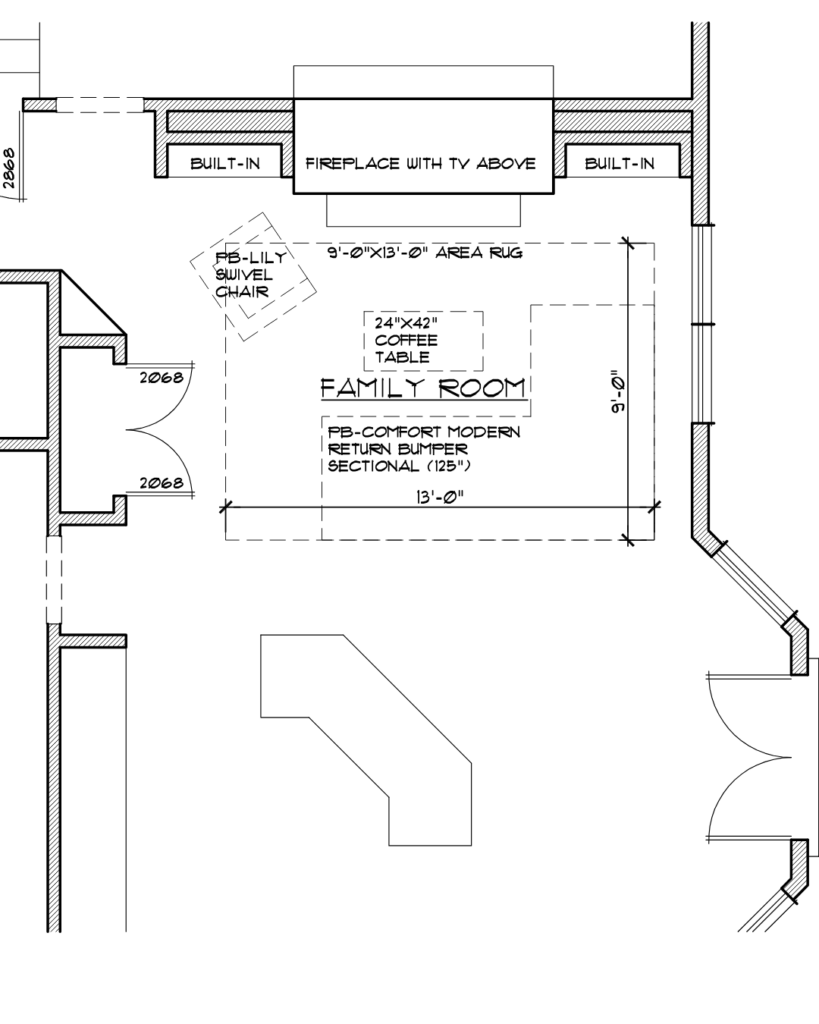
Option 1: Sectional Layout
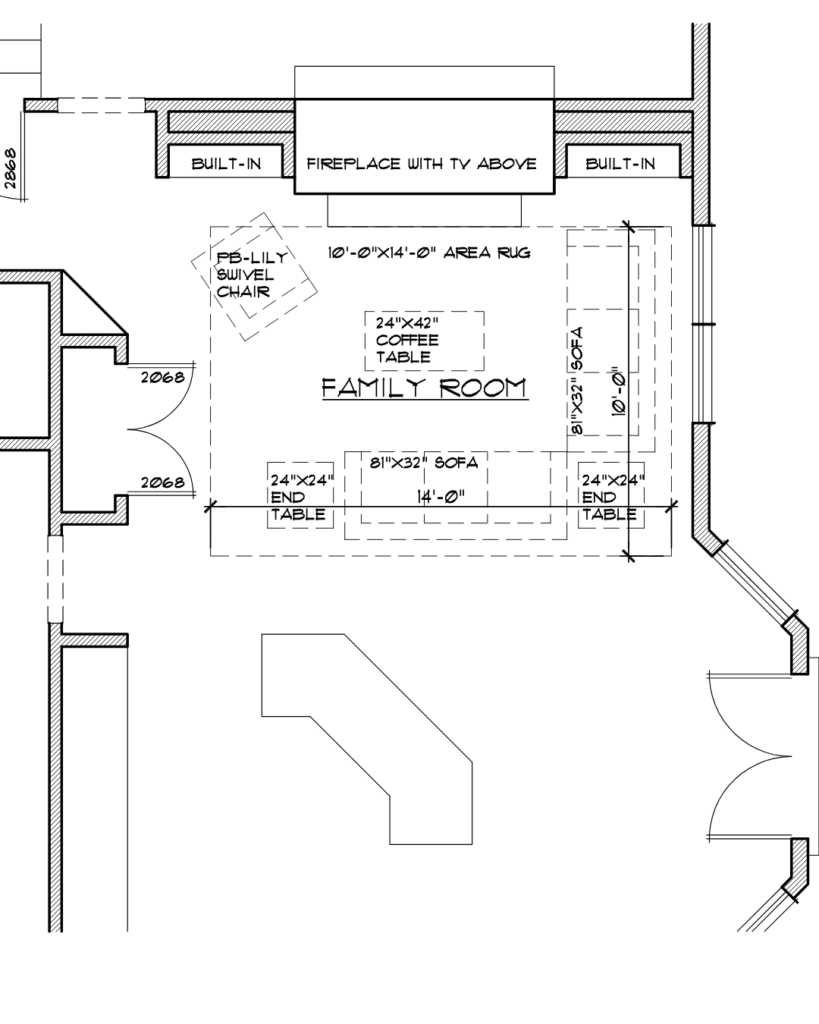
Option 2: Two-Sofa Layout
As a designer, I create a space plan before I source a single item. It lets me study the room’s proportions, traffic flow, and furniture relationships before any purchasing decisions are made, so that what I recommend actually works in the real room, not just in a mood board.
Start with the plan. Everything else has something to respond to.
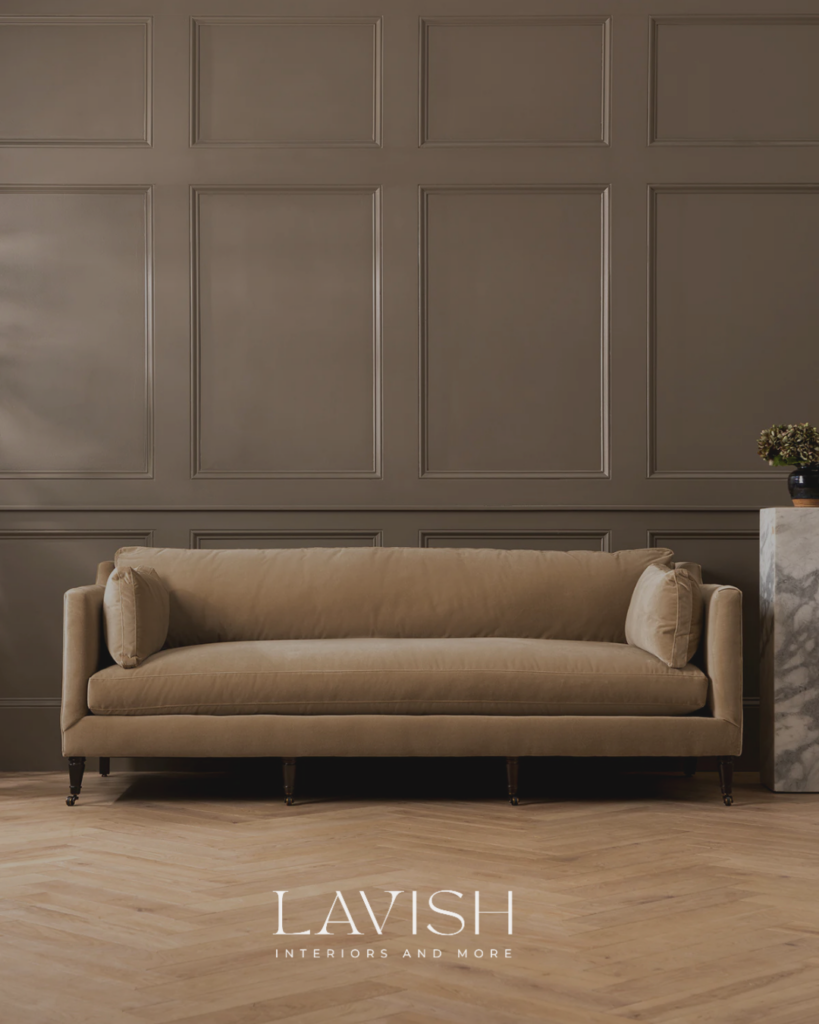
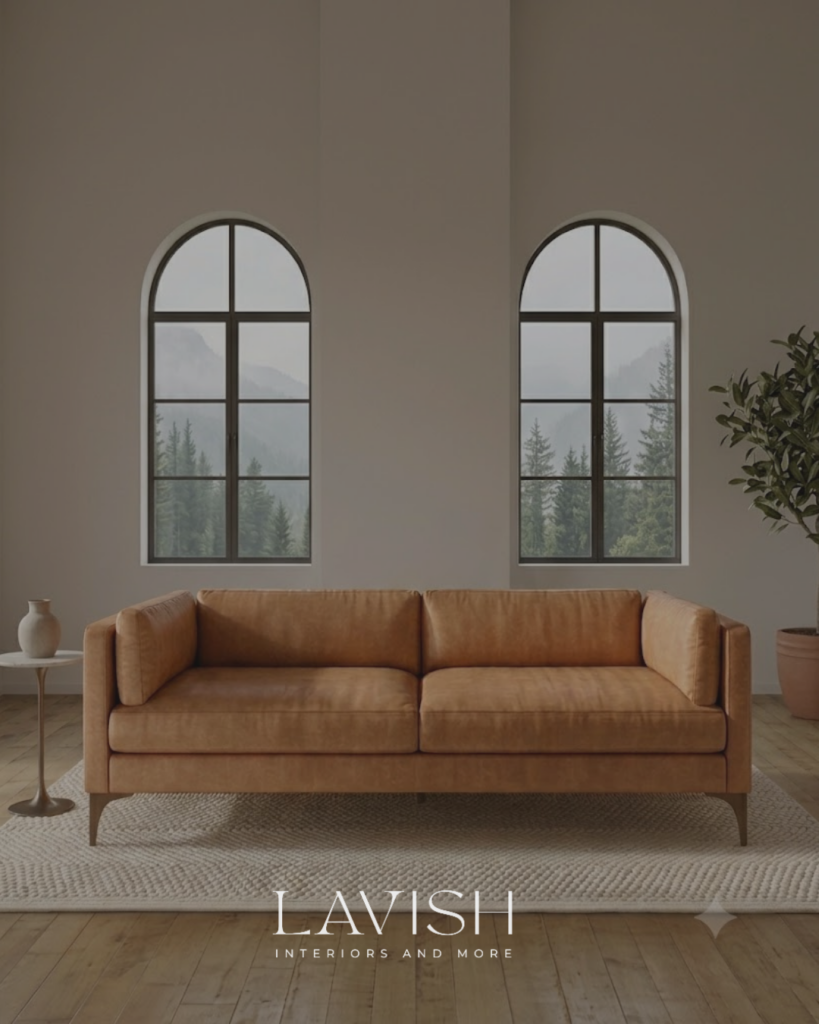
Furniture: The Anchor of the Room
In a living room, furniture is almost always where I begin. There is a practical reason for that.
Sofas are often your largest investment and your most constrained decision. Most come in a limited range of fabric or leather options. The scale has to work with the room. The silhouette has to work with the style direction. Once you commit, everything else in the room follows its lead.
Most people approach a living room the other way around. They start small, a throw pillow here, a lamp there, and work toward the big pieces. Along the way, they pick things up on sale, excited about a good deal without stopping to consider whether the piece actually belongs in the room they are trying to build. A sale item that does not fit the space is not a deal. It is a distraction. And more often than not, the same budget spent intentionally on something chosen for the specific room produces a result that looks and feels completely different.
When selecting furniture, think about scale relative to the room and to the other pieces. Think about silhouette, whether you are drawn to more detail and character or to something cleaner and more understated. Think about fabric or leather and how it will wear for how you actually live. And think about how the pieces face each other, because that relationship is what creates the energy of the room.
Consider how the space will actually be used. Will it host gatherings? Quiet evenings? Family movie nights? A room that supports your lifestyle will always feel more successful than one designed solely for a photograph.
If you are gathering ideas or ready to start sourcing, I have linked some of my favorite pieces below. These collections reflect the layered, timeless aesthetic I often create for clients and include options at multiple price points. LTK pieces lean aspirational and investment-level. Amazon picks offer accessible luxury without compromising the aesthetic.
Shop the Look: Living Room Furniture
The Rug: The Layer That Ties It All In
The rug is often the element that transforms a furniture arrangement into a cohesive living room.
It defines the seating area, introduces texture and warmth, and sets the overall mood of the space. It needs to be in conversation with the furniture around it, the palette you are building toward, and the feeling you are trying to create. None of these decisions happen in isolation.
One of the most common corrections I make in client projects is increasing the rug size. It is a small change that can dramatically improve how a room feels. When you have a space plan, the right rug size becomes much clearer. Without one, most people guess, and the guess is almost always too small. Today, you can even input your room dimensions into an AI tool to get a starting point, though I would use that as a reference rather than a final answer.
For clients who still have trouble visualizing size on paper, I often suggest a simple trick: grab a roll of painter’s tape and lay out the different rug size options directly on the floor. Walking around the taped outline and sitting in your furniture gives you a completely different sense of scale than any drawing or screen can. It takes ten minutes, and it has saved more than a few clients from a very expensive mistake.
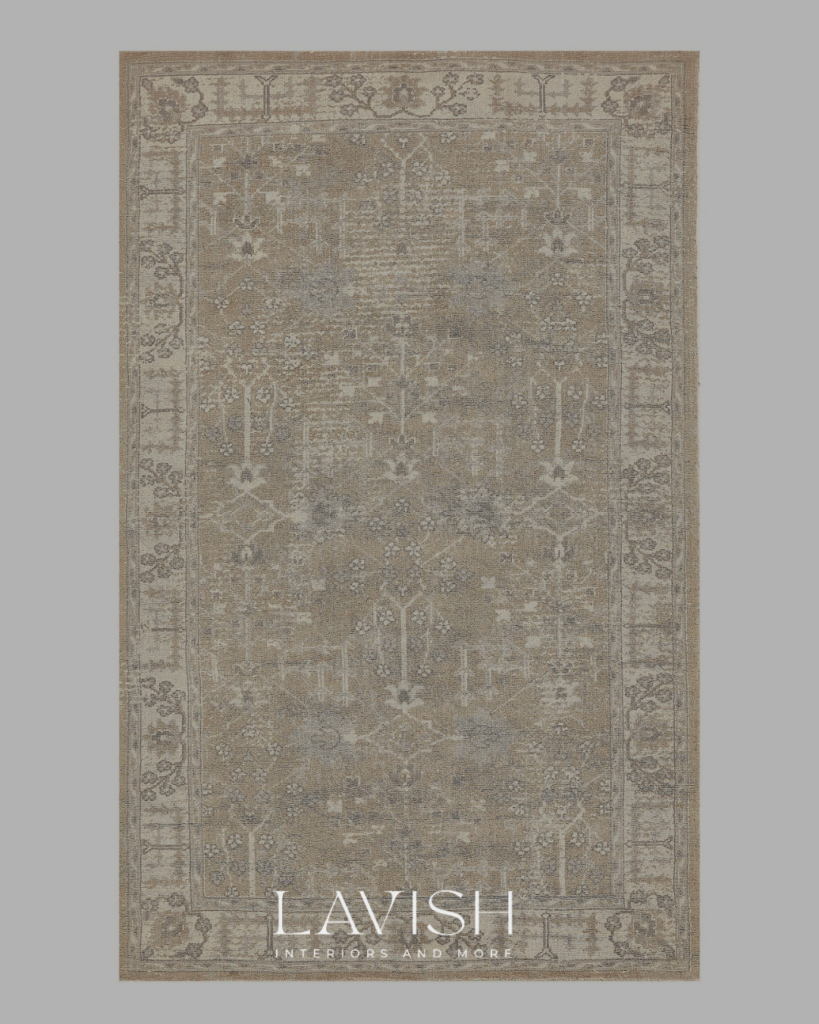
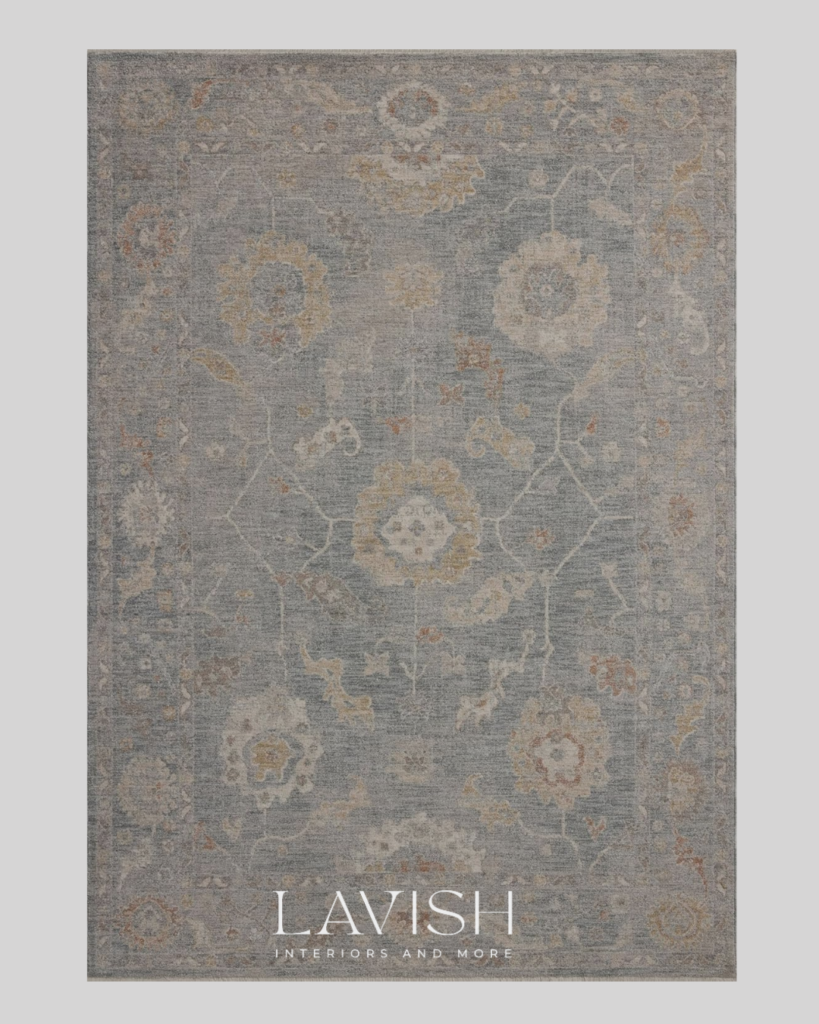
In terms of texture and color, the rug responds to the sofa. If the sofa is a warm linen, the rug might bring in a natural fiber or a subtle pattern that picks up the warmth. If the sofa is a deep leather, the rug might soften the room with something lighter and more textural. They do not have to match. They just have to speak the same language.
One more thing worth saying directly: a rug on sale is not always a rug that belongs in your room. It is easy to get excited about a good price without considering how the piece will work with everything else. In my experience, when I shop for clients online I can almost always find something more aesthetically aligned for the same price or less than what they found on clearance. Intention almost always beats opportunity when it comes to building a cohesive room.
Custom rug sourcing is always worth the conversation for anyone who wants something truly specific, a particular size, a custom colorway, or a stair runner that coordinates with the main living area. It opens up options that ready-made rugs simply cannot match, and it ensures the piece is built for your exact space rather than the other way around.
If you are gathering ideas or ready to start sourcing, I have linked my current rug picks below. Whether you are looking for a statement piece or a quiet textural foundation, these collections include options at multiple price points.
Shop the Look: Living Room Rugs
Artwork and Decor: Where the Room becomes Yours
Once the foundational pieces are in place, the room is ready for personality.
Artwork, objects, throw pillows, books, greenery, and layered textiles are what transform a space from functional to meaningful. This is the layer where a living room stops looking like a showroom and starts feeling like the people who live there.
It is also the layer most people either overdo or underdo. Too much and the room feels cluttered and restless. Too little and it feels like someone moved in but never really settled.
A few things I always keep in mind at this stage:
Throw pillows are one of the fastest ways to pull color and texture from your rug and furniture into something cohesive. They do not all have to match. They do have to belong together.
Artwork should be considered in relationship to scale. A piece that is too small on a large wall emphasizes the emptiness rather than filling it. When in doubt, go larger.
Coffee table styling is its own small art form. A tray, a stack of books, one object with meaning, something living like a plant or fresh greenery. The goal is intentional, not decorated.
Layering is what gives a room that collected, lived-in quality no single purchase can create on its own. A throw draped over the arm of the sofa. Objects at varying heights on a shelf. A piece of art that makes someone stop and look twice.
Shop the Look: Artwork and Decor


Window Treatments: More foundational than you think
Window treatments tend to be the last thing people think about. That is a mistake worth avoiding.
Quality treatments take time. Plantation shutters, motorized shades, and draperies all have real lead times. If you are planning to layer a hard treatment with a soft one, which most rooms benefit from, those are multiple decisions that need to work together from the beginning.
Window treatments affect how light moves through a space, how tall the room feels, and how finished it looks. A few things worth thinking through early: whether you want shutters, shades, or something layered, how much light control you need, and whether you want the treatment to frame the window or extend well beyond it to make ceilings feel taller.
A St. Louis Resource I Trust
For hard treatments in the St. Louis area, I work with St. Louis Blinds and Shutters. They are a family-owned business that has been serving the area for 14 years, specializing in plantation shutters and motorized shades. They started from scratch and built their reputation entirely on quality and service, and it shows in every installation.
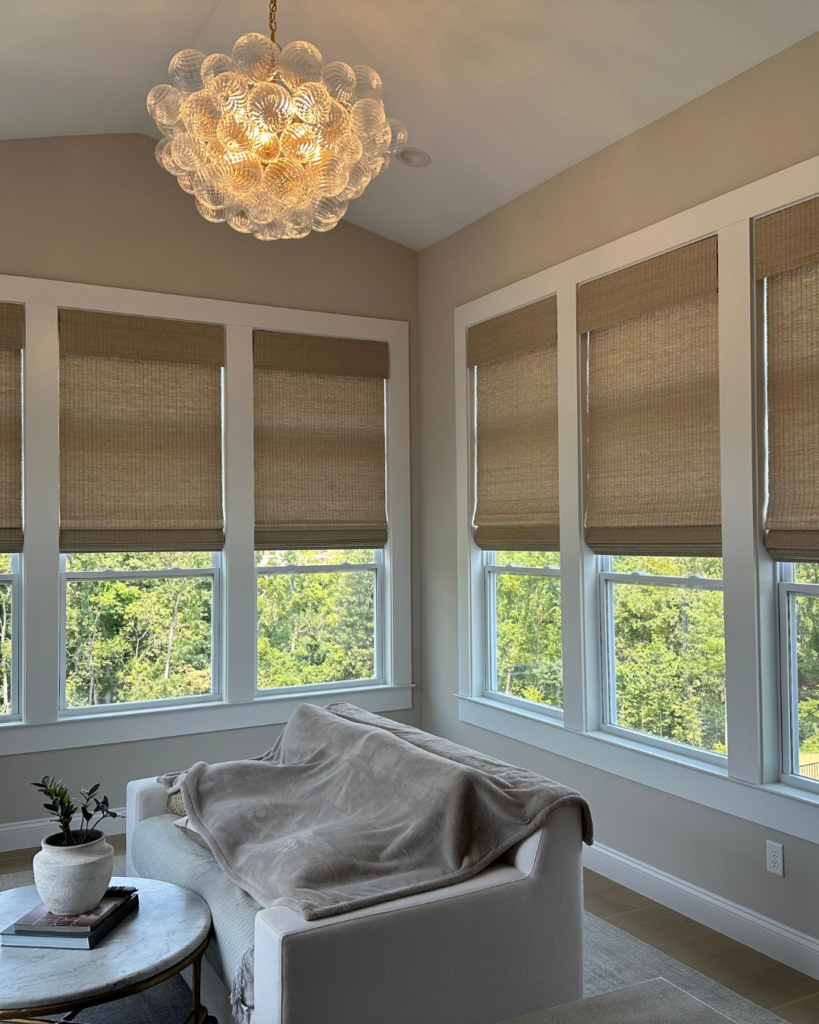
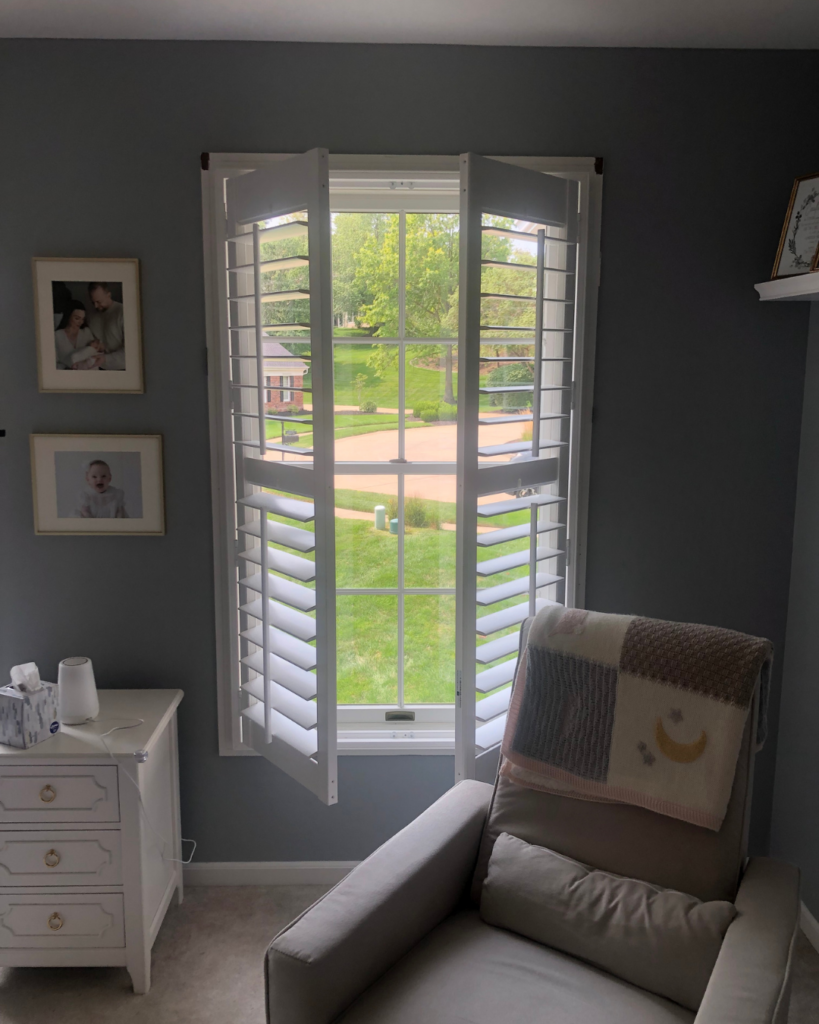
If you are ready to get your windows right, visit them at stlouisblindsandshutters.com. As a Lavish Interiors reader, use code LAVISH10 for 10% off your total order.
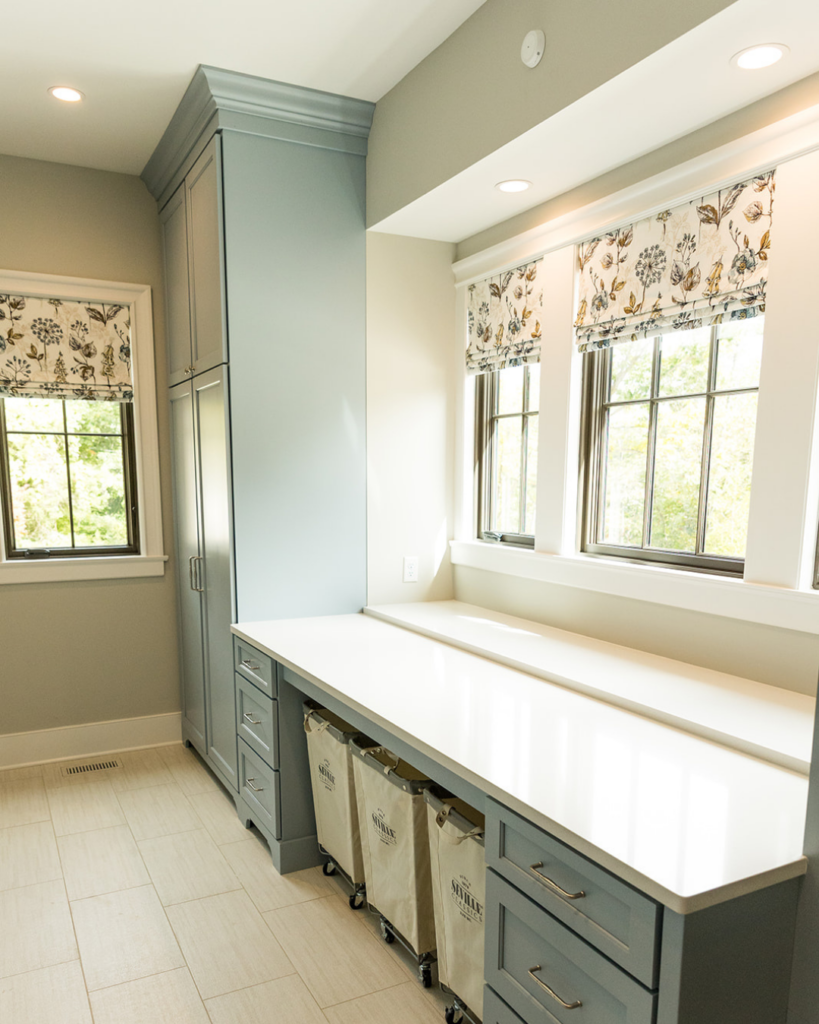
Custom Drapery
For clients interested in custom drapes and soft treatments, I also work with a local workroom that produces beautiful curtains tailored to the exact dimensions of each space.
If you would like to explore custom drapery for your home, reach out through my contact page and I am happy to share more. Book a Consultation
A Ready-Made Option Worth Knowing
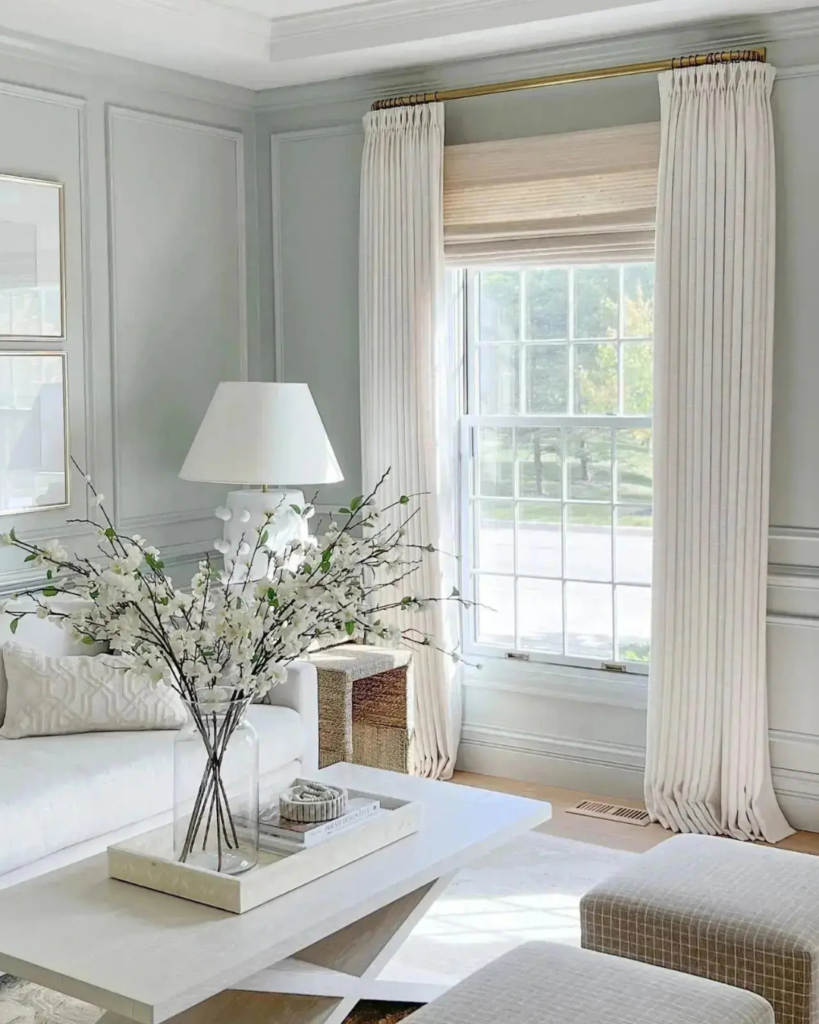
For clients looking for a high-quality ready-made option, I have a trade account with Two Pages Curtains, a beautiful middle ground between off-the-shelf and fully custom.
With my trade discount applied, you get access to better pricing than retail and simply cover my time.
If you are interested in exploring this for your home, reach out through my contact page and I am happy to help. Contact Page
You do not have to do all of this at once.
The most beautiful living rooms are not finished in a day. They are built deliberately, one right decision at a time. A foundation, and then everything that belongs on top of it.
A strong foundation makes everything else possible.
carrissa hickey
The Fine Line Between a Room That Works and One That Doesn't
The Undersized Floating Rug
A rug that is too small instantly shrinks a room. Your furniture should sit on it comfortably, grounding the entire layout.
Wall-Hugging Furniture
Pushing sofas and chairs flat against the wall disrupts the energy of a room. Pull them inward and the space immediately breathes.
The Eye-Level Art Trap
Most artwork is hung too high. It should relate to the furniture beneath it, anchoring the eye rather than drifting up.
The Window Afterthought
Waiting until the end to think about window treatments leads to compromises. Plan for them from the beginning.

Ready to Build Your Living Room Foundation?
Stay Inspired
If you enjoy this kind of behind-the-scenes design perspective, I share a monthly design letter where I go deeper into the process, seasonal inspiration, and intentional ways to approach your home throughout the year. You’re welcome to join if you’d like to be part of it.
Build the Foundation. Live With Intention.
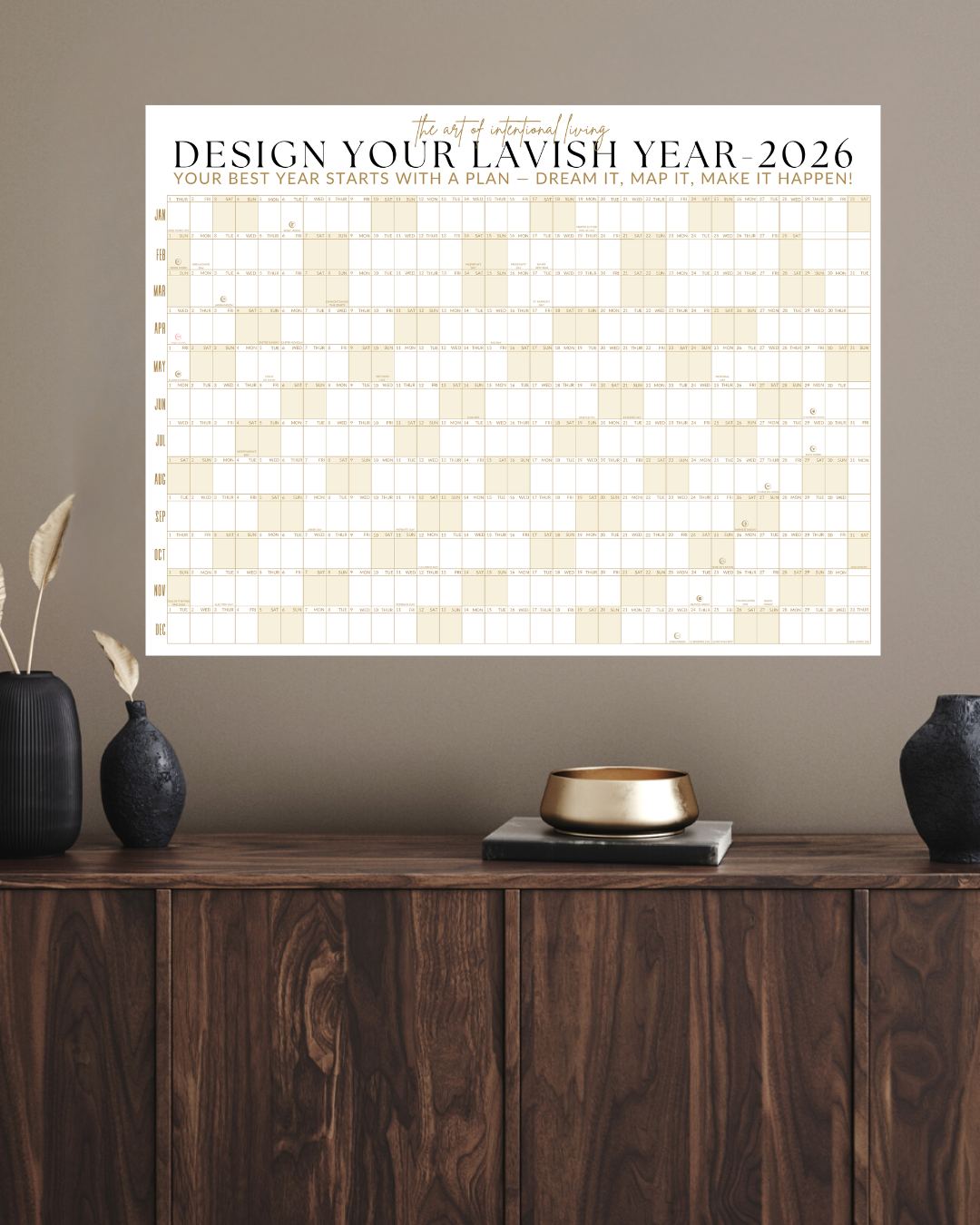
July is a reminder that everything worth having starts with a strong foundation. The Lavish 2026 Signature Wall Calendar was designed to keep your intentions visible and your vision moving forward all year long, a 36″ x 48″ visual planning canvas available in Slate and Sandstone.